Battery Energy Storage Systems
Commercial battery storage installation for demand charge reduction, backup power, peak shaving, and grid services.
Our Battery Energy Storage Systems capabilities
Demand Charge Management
Battery storage systems discharge during peak demand windows to shave the demand spikes that drive 30–50% of commercial utility bills. We model your load profile to right-size the battery for maximum bill reduction.
Backup Power & Resilience
Seamless backup power for critical loads during outages. Systems configured for automatic island-mode operation — no manual intervention required when grid power fails.
Solar+Storage Integration
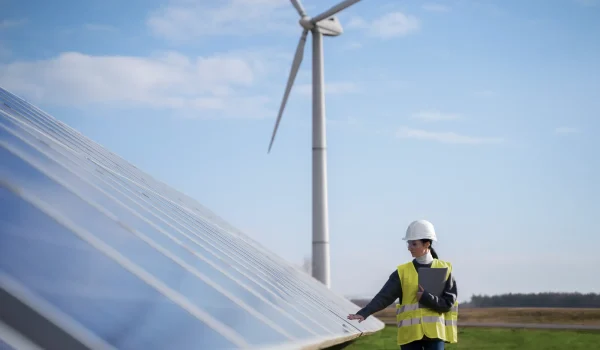
Battery systems co-located with solar PV maximize self-consumption, shift production to peak price periods, and provide backup power when neither grid nor sun is available.

Ideal for these applications
High Demand Charge Customers
Manufacturers, cold storage facilities, and EV charging operators where demand charges dominate the utility bill — battery storage typically reduces bills by 15–35%.
Critical Facilities
Data centers, medical facilities, and emergency services where grid outages are unacceptable — battery storage bridges the gap until generator start or extends run time for critical loads.
Microgrids
Campuses, industrial parks, and municipal facilities creating energy-independent microgrids combining solar, storage, and generator assets.
Commercial Solar Owners
Existing solar PV owners looking to add battery storage to maximize self-consumption, avoid export curtailment, and gain backup capability.
Our battery energy storage systems process
Load & Tariff Analysis
Utility bill review, demand charge history, time-of-use rate analysis, and load profile assessment to determine optimal battery size and operating strategy.
System Design
Battery selection, inverter sizing, integration with existing solar or generator systems, and safety system design — submitted for utility and AHJ review.
Installation
Battery enclosure placement and anchoring, electrical interconnection, safety disconnect installation, and controls wiring by our licensed electrical crews.
Commissioning & Optimization
System start-up, operating mode programming (demand response, backup, arbitrage, or combined), monitoring platform activated, and performance verified against financial model.
Frequently asked
What battery chemistry do you install?
We primarily install lithium iron phosphate (LFP) systems for commercial applications due to their superior thermal stability, long cycle life (4,000+ cycles), and UL 9540 compliance. We work with Generac PWRcell, Stem Athena, and Tesla Megapack for commercial scale.
Is battery storage eligible for the federal investment tax credit?
Standalone battery storage became eligible for the 30% federal ITC under the Inflation Reduction Act. Battery systems co-located with solar may be eligible for additional incentives. We can help identify applicable credits.
How long will the batteries last?
Commercial LFP batteries are typically warranted for 10 years at 80% capacity retention. Real-world life is often 15–20 years at moderate cycling rates.
Related services

Ready to add battery
storage to your facility?
From demand charge reduction to backup power, we design and install commercial BESS systems that deliver measurable ROI.
- BESS system design included
- Utility interconnection support
- 12-state service area